
松門文庫
Shomon Bunko展示アーティストArtist
松本市浅間温泉2丁目
開館時間 10:00–17:00
休館日 会期中無休
建物について
建築年 大正8(1919)年
設計者 不明
施工者 宮田元一(洞地区出身の大工棟梁)
浅間温泉のある本郷地区は、明治時代から蚕種製造業(※1)が盛んであった。松本平では、江戸時代から、風穴(※2)を蚕種の保管に使って孵化の時期を調整し、本来の春だけでなく晩秋まで、年6回の養蚕を可能にする「風穴蚕種」の研究が行われてきた。この建物の建築主、二木洵(ふたつぎ まこと)も蚕種製造業者で、その養父、二木秀一の墓石には、「…秋蚕が世に役立つと思い当たり、飼育法を研究し製造し、原種を多く発明してもっぱら蚕種製造業に向上を重ねた。それにより名声が高まり全国から養蚕家が買い求めに来た。安曇と筑摩の二郡で生産されるものが巨万の利を生み、君の家がその代表であった」と刻まれている。
二木洵の実父、窪田畔夫(くぼた くろお)は、長野県の自由民権運動の先駆者である。書や南画を描き、長野県の美術界の重鎮でもあった。窪田畔夫が蒐集した書画などを一般に公開するための私設図書館として、この建物は建てられた。開設を報じた新聞記事には、2万点の書籍・書画を有すること、立派な庭園があること、開館記念の園遊会が催されたことが記されている。
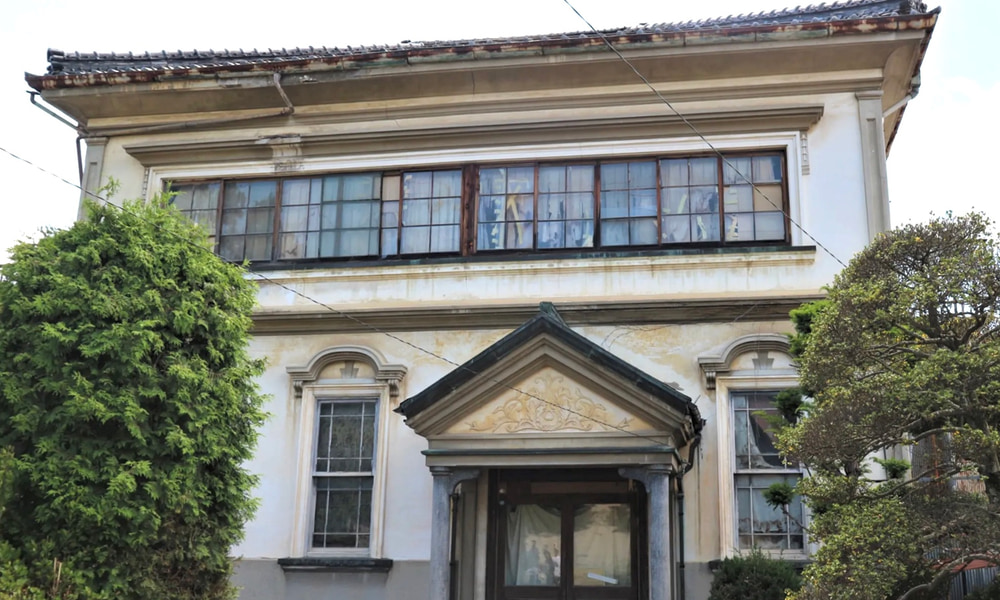
建物は、国宝旧開智学校の流れをくむ擬洋風建築であり、近代和風建築でもある。大正時代になると、洋風建築ではセメントを用いた洗い出し仕上げの壁が主流となるが、ここでは外壁を白漆喰塗りとし、腰壁は目地を切った洗い出し仕上げ、軒裏を塗り込めた軒蛇腹など、土蔵を思わせる擬洋風の趣と、上げ下げ窓まわりの大正期らしい装飾が融合している。玄関ポーチの銅板うろこ葺きの屋根は、全国的にも珍しいとされる。ポーチ柱まわりの研ぎ出し仕上げや、内外部の装飾の鏝仕事は秀逸である。
令和3(2021)年に有志による「松門文庫をひらく会」が発足し、保存と活用に向けた活動が続けられている。
※1 蚕種製造業:蚕種(蚕の卵)の製造販売業で、蚕の品種改良も行っていた。
※2 風穴(ふうけつ):山肌の隙間から噴き出る冷気を利用した、天然の冷蔵庫。
Shomon Bunko
Asama Onsen 2-chome, Matsumoto, Nagano
Artist: Takashi Nakajima
Hours: 10:00–17:00
Closed: None during the festival
About the Building
Year of construction: 1919
Architect: Unknown
Builder: Motoichi Miyata (master carpenter from the Hora district)
The Hongo district, where Asama Onsen is located, has thrived in silkworm egg production [1] since the Meiji era. In the Matsumoto Basin, since the Edo period, research has been carried out on fuketsu silkworm eggs: eggs stored in fuketsu (wind caves) [2], which made it possible to adjust the timing of hatching and to raise silkworms six times a year, not only in the usual spring but through late autumn. The building’s client, Makoto Futatsugi, was also a silkworm egg producer. The gravestone of his adoptive father, Hideichi Futatsugi, is inscribed: “…Realizing that autumn silkworms would be of use to the world, he studied rearing methods and produced them, developed many original strains, and devoted himself entirely to improving silkworm egg production. As a result his reputation grew, and silkworm farmers came from all over the country to buy from him. What was produced in the two districts of Azumi and Chikuma brought enormous profit, and your family was its representative.”
Futatsugi’s birth father, Kuroo Kubota, was a pioneer of the Freedom and People’s Rights Movement in Nagano Prefecture. He wrote calligraphy and painted in the nanga (literati) style, and was also a leading figure in the art world of Nagano Prefecture. This building was built as a private library to open to the public the calligraphy, paintings, and other works that Kubota had collected. According to a newspaper article reporting its opening, the library held 20,000 books and works of calligraphy and painting, had a splendid garden, and held a garden party to commemorate its opening.
The building is a giyofu (“pseudo-Western”) structure in the lineage of the former Kaichi School, a National Treasure, and is also a work of modern Japanese-style (kindai wafu) architecture. By the Taisho era, walls with a cement-based exposed-aggregate finish (araidashi) had become the mainstream in Western-style buildings. Here, however, the exterior walls are finished in white plaster, the wainscot has an exposed-aggregate finish with cut joints, and the eave cornice (nokijabara) has its underside plastered over. Together, these evoke the character of a dozo storehouse, and they blend with the decoration around the double-hung windows that is typical of the Taisho era. The copper-plate scale-pattern roof of the entrance porch is said to be rare even by national standards. The polished-aggregate (togidashi) finish around the porch columns and the trowel work (kote-shigoto) of the ornaments, inside and out, are outstanding.
In 2021, a volunteer group, Shomon Bunko wo Hiraku Kai (Association for Opening Shomon Bunko), was founded, and its efforts toward the building’s preservation and use continue.
Notes
[1] Silkworm egg production: The business of producing and selling silkworm eggs, which also involved improving silkworm breeds.
[2] Fuketsu (wind cave): A natural refrigerator that uses cold air blowing out of gaps in the mountainside.