
松本本箱(松本十帖)
Matsumoto Honbako (Matsumoto Jujo)展示アーティストArtist
松本市浅間温泉3丁目13-1
開館時間 12:00–17:00(最終入館16:00)
休館日 11月7日(土)
ご入館について(事前予約制・無料)
松本本箱は、事前予約制です。ご予約なしではご入館いただけません。
ご入館には、下記の予約ページから、ご来館の日時をご予約ください。
入館料はかかりません。
建物について
建築年 平成3(1991)年 改修:令和2(2020)年
設計者 不明 改修:SUPPOSE DESIGN OFFICEほか
施工者 株式会社守谷商会 改修:株式会社アスピアほか
かつての「観山楼 小柳旅館」は、浴場として400年近い歴史を持つ、浅間温泉を代表する老舗旅館として知られていた。昭和初期の文献によると、2階から4階建ての宏壮な四棟があり、29の客室と60畳の広間、4か所の浴場を擁した。カメラを携行した客人のために、写真暗室も備えていた。当主は、貞享3(1686)年の百姓一揆、貞享騒動(※)の首謀者の一人として処刑された義民、三浦善七の子孫であった。
「松本十帖」は、平成後期に、後継者の不在と、平成初期のホテル棟建設による過大な債務という課題を抱えていたホテル小柳を、地域活性化プロジェクトとして再生させるというコンセプトのもと、株式会社自遊人が取得、改修して再出発させた施設である。
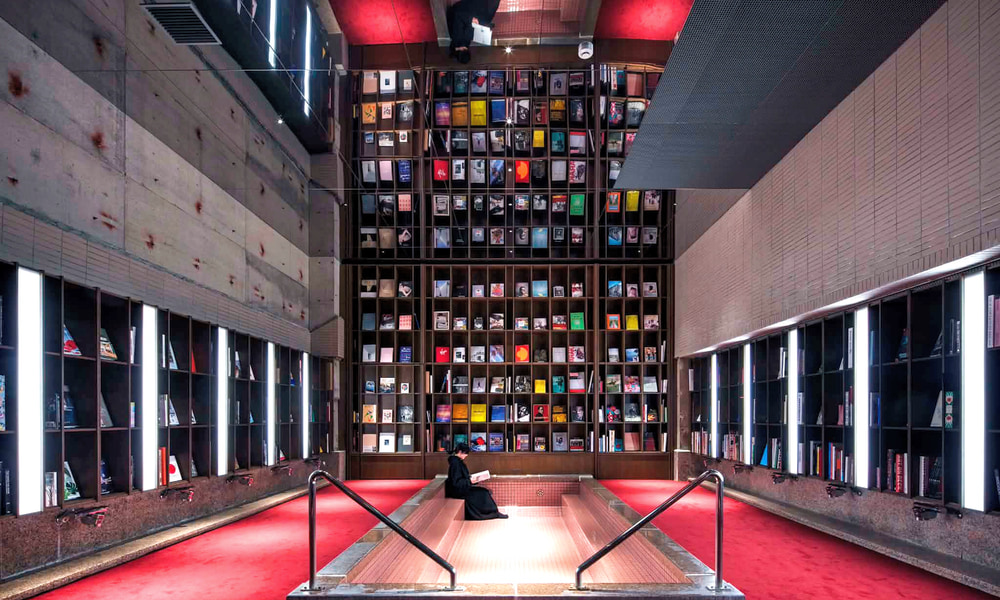
その中にある「松本本箱」は、24の全室に露天風呂が付いた「ブックホテル」で、ホテル、ブックストア、ダイニングの機能を持つ。ブックストアの「本箱」は、旧小柳の時代を思わせる赤絨毯を敷き、浴場のカランや浴槽を残した空間である。「オトナ本箱」は、鏡張りの天井が天井の高さを倍に感じさせ、「こども本箱」は、子供のスケールで造られた本箱の迷路が、不思議な感覚をもたらす。安価なベニヤ板でつくられた本箱は、目地や材の納め方によって、立派な家具となっている。敷地内には、旧小柳の時代の土蔵も残る。
松本本箱は、2022年にiF Design Award、2023年には松本市景観賞の部門賞を受賞した。
※ 貞享騒動(じょうきょうそうどう):貞享3(1686)年に信濃国松本藩で起きた百姓一揆。安曇郡長尾組(現在の安曇野市)中萱村の元庄屋、多田嘉助を中心とした同志が、百姓たちの窮状を救うため、松本の郡奉行所へ直接、年貢減免などを求める5か条の訴状を提出した。藩はいったん要求を受け入れたが、江戸家老の助言を得て約束を反故にし、首謀者を処刑した。この中の一人、三浦善七の3歳の息子・喜平治も処刑の対象であったが、女中が背負って宝榮寺に駆け込み、難を逃れた。喜平治の子孫が、小柳の湯の当主であった。貞享騒動は民権運動の前例とされ、安曇野の自由民権運動家、松澤求策(まつざわきゅうさく)が演劇として上演したり、浅間温泉で自由民権運動の結社、奨匡社(しょうきょうしゃ)の決起集会が開かれたりするなど、浅間温泉は自由民権運動と深いかかわりがある。
Matsumoto Honbako (Matsumoto Jujo)
3-13-1 Asama Onsen, Matsumoto, Nagano
Artist: Kengo Kito
Hours: 12:00–17:00 (last admission 16:00)
Closed: Nov 7 (Sat)
Admission (advance reservations required; free admission)
Advance reservations are required to enter Matsumoto Honbako. Entry without a reservation is not permitted.
Please reserve the date and time of your visit through the reservation page below.
Admission is free.
▶ Make a reservation (Matsumoto Jujo official website)
About the Building
Year of construction: 1991; Renovation: 2020
Architect: Unknown; Renovation: SUPPOSE DESIGN OFFICE and others
Builder: Moriya Shokai Co., Ltd.; Renovation: ASUPIA Co., Ltd. and others
The former Kanzanro Koyanagi Ryokan was known as a long-established inn representing Asama Onsen, with a history of nearly 400 years as a bathing facility. According to documents from the early Showa period, it had four grand buildings of two to four stories, with 29 guest rooms, a 60-tatami-mat banquet hall, and four bathing areas. It even had a photographic darkroom for guests who carried cameras. The head of the family was a descendant of Zenshichi Miura, a righteous commoner (gimin) who was executed as one of the leaders of the Jokyo Uprising [1], a peasant revolt of 1686.
Matsumoto Jujo is a facility created by Jiyujin Co., Ltd., which acquired and renovated Hotel Koyanagi to give it a fresh start. In the late Heisei period, the hotel faced the problems of having no successor and carrying excessive debt from the construction of hotel buildings in the early Heisei period, and Jiyujin took it on with the concept of reviving it as a regional revitalization project.
Within it, Matsumoto Honbako is a “book hotel” with 24 guest rooms, each with its own open-air bath, combining the functions of a hotel, a bookstore, and dining. In the bookstore, “Honbako” (bookcase), a red carpet evoking the image of the days of the former Koyanagi has been laid, and the bathhouse faucets (karan) and bathtubs of the old baths have been kept. In “Otona Honbako” (Adults’ Honbako), a mirrored ceiling makes the ceiling seem twice as high, while in “Kodomo Honbako” (Children’s Honbako), a maze of bookcases built to a child’s scale creates a sense of wonder. The bookcases, made of inexpensive plywood, have become fine pieces of furniture through the care taken with the joints and the way the materials are fitted together. A storehouse (dozo) from the days of the former Koyanagi also remains on the grounds.
In 2022, Matsumoto Honbako received the iF Design Award, and in 2023, a Category Award at the Matsumoto City Landscape Awards.
Notes
[1] Jokyo Uprising: A peasant uprising that took place in Matsumoto Domain, Shinano Province, in 1686. Kasuke Tada, a former village headman of Nakagaya Village in the Nagao district of Azumi County (present-day Azumino), and his fellow villagers directly submitted to the county magistrate’s office in Matsumoto a petition of five articles, including a request for reduced land tax, in order to rescue the peasants from their plight. The domain at first accepted the demands but, on the advice of a chief retainer in Edo, went back on its promise and executed the leaders. One of them, Zenshichi Miura, had a three-year-old son, Kiheiji, who was also to be executed, but a maidservant carried him on her back and fled to Hoeiji Temple, saving his life. Kiheiji’s descendants became the heads of the Koyanagi-no-Yu family. The Jokyo Uprising is regarded as a precedent for the Freedom and People’s Rights Movement: the activist Kyusaku Matsuzawa of Azumino staged it as a play, and a rally of the movement’s association, Shokyosha, was held in Asama Onsen. Asama Onsen thus has deep ties with the movement.