
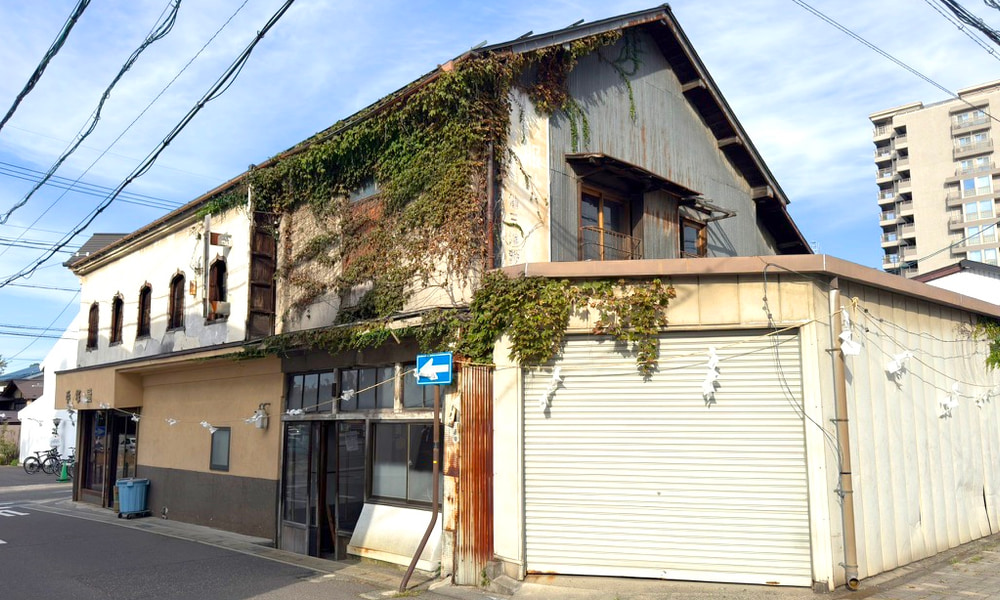
旧油三洋裁店
Former Aburasan Tailor Shop展示アーティストArtist
松本市大手2丁目249-10
開館時間 10:00–17:00
休館日 会期中無休
建物について
建築年 昭和初期(推定)
設計者 不明
施工者 不明
建物の南面の壁に「油三洋裁店」「一級技能士」などの文字が残り、衣服の裁ち縫いや縫い直しなどの仕立業を営んでいたことが読み取れる。大正時代には、伊勢町で足袋股引製造業を営む商家として油三の記録が残る。昭和12(1937)年の記録では、松本市の足袋の生産量は埼玉県行田市に次いで全国2位であった。市民の暮らしが和装から洋装へ移るなか、需要の変化に応じて洋裁店に業種を替えたと考えられる。
北隣の仏具店とは、屋根や1階の庇ラインの意匠がつながっており、同一棟であることがわかる。店舗の境目で正面の外観を変えた、いわゆる「長屋建て看板建築」である。洋裁店側の外壁は、石張りを模した目地を切った洗い出し仕上げで、レリーフなどの装飾はないものの、洋風の意匠を前面に出している。
入口には靴脱ぎがあり、床は店の手前から板張りとなっている。手前の部分はもともと土間で、板張りは框から奥のみであったと考えられる。南側には窓があり、光の入る作業スペースだったとみられる。天井から下がる糸巻やメジャーが、洋裁店であった名残をとどめる。
Former Aburasan Tailor Shop
2-249-10 Ote, Matsumoto, Nagano
Artist: Masaharu Sato
Hours: 10:00–17:00
Closed: None during the festival
About the Building
Year of construction: Early Showa period (estimated)
Architect: Unknown
Builder: Unknown
Lettering remains on the south wall of the building, including the characters for “Aburasan Tailor Shop” and “Grade 1 Certified Skilled Worker,” indicating that the shop was engaged in tailoring: cutting and sewing garments and altering clothing. Records from the Taisho period show that a merchant house named Aburasan operated in the Isemachi district as a maker of tabi (split-toed socks) and momohiki (traditional work trousers). A record from 1937 shows that Matsumoto ranked second in the nation in tabi production, after Gyoda in Saitama Prefecture. As daily life shifted from Japanese to Western dress, the business is thought to have changed its trade to dressmaking in response to changing demand.
The roof and first-floor eave lines are continuous with those of the Buddhist altar goods shop to the north, showing that the two shops occupy a single building. The façade changes at the boundary between them, making this a so-called row-house-type kanban kenchiku (signboard building). The tailor shop’s exterior wall is finished in exposed-aggregate plaster (araidashi) with joints cut to imitate stone cladding. Though it has no reliefs or other ornament, the design brings a Western style to the fore.
At the entrance is a step for removing shoes, and the floor is boarded from the front of the shop inward. This front section was originally a dirt floor (doma); the boarded floor is thought to have begun only beyond the raised threshold (kamachi). Windows on the south side suggest a bright workspace. The spools of thread and tape measures hanging from the ceiling retain the memory of the building’s life as a tailor shop.