
下町会館
Shitamachi Kaikan展示アーティストArtist
松本市大手4丁目8-11
開館時間 10:00–17:00
休館日 会期中無休
建物について
建築年 昭和3(1928)年 再生工事:平成7(1995)年
設計者 元:不明 再生工事:長野県建築士事務所協会松筑支部
施工者 元:不明 再生工事:中部建設工業株式会社 他
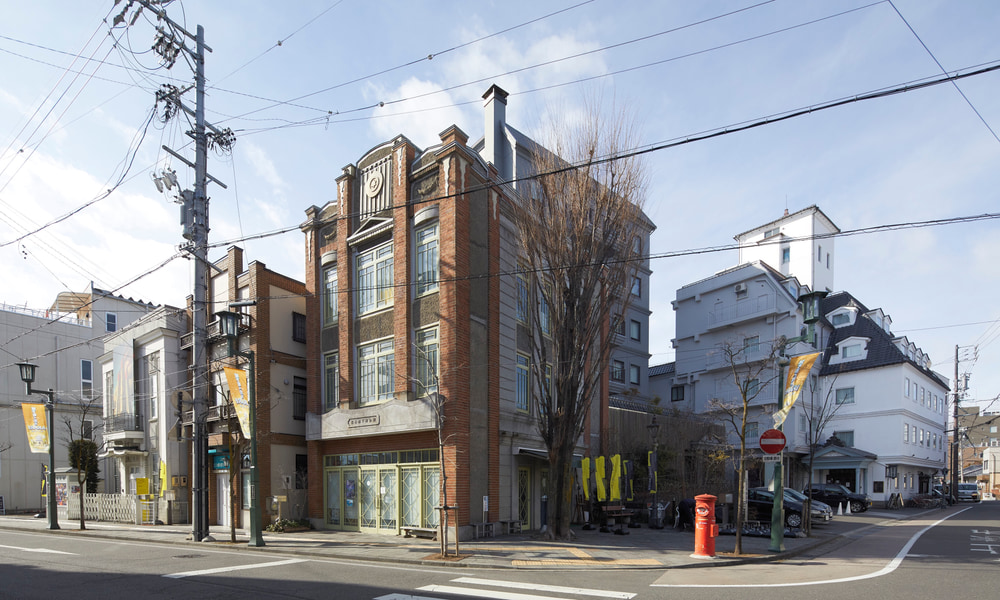
昭和3(1928)年に建てられた木造3階建ての看板建築で、建築当時は南隣にあった。昭和63(1988)年頃、老朽化により解体を迫られていたが、上土通りの街並みに無くてはならないものとしてファサード部分の保存が決まった。再生工事では東側約1.8mの範囲をオリジナルの木造部分として鉄骨補強し、新築した鉄筋コンクリート造の本体につなげるように増築されている。
平成7(1995)年に貸室などを備えた「下町会館」としてリニューアルオープンした。新築された部分は、元の意匠を基にデザインされている。外壁には、手引きのスクラッチタイルに代えてメーカーに特注したタイルを用いており、当初のものとは風合いが異なる。また、洗い出し仕上げも当時の技法の再現が難しく、見上げ部分には施していないなど、材料や工法の変遷を示す建物でもある。ドアや窓の鉄製の格子は、鉄の厚板を切り出して作られている。
上土通りは、スクラッチタイルを基調としたハイカラ建築で街並み修景を行っており、大正ロマンの街として、松本を訪れる観光客にも親しまれている。
Shitamachi Kaikan
4-8-11 Ote, Matsumoto, Nagano
Artist: Michael Rikio Ming Hee Ho
Hours: 10:00–17:00
Closed: None during the festival
About the Building
Year of construction: 1928; Renovation: 1995
Architect: Original: Unknown; Renovation: Nagano Prefecture Association of Architectural Firms, Shochiku Branch
Builder: Original: Unknown; Renovation: Chubu Construction Industry Co., Ltd., and others
Built in 1928, this three-story wooden kanban kenchiku (signboard building) originally stood on the adjacent lot to the south of its present site. Around 1988, the building faced demolition because of its age, but it was decided to preserve its façade as something indispensable to the streetscape of Agetsuchi Street. In the renovation, the eastern portion, extending about 1.8 meters, was kept as the original wooden section and reinforced with a steel frame, then joined to a newly built reinforced-concrete main structure.
In 1995, it reopened as Shitamachi Kaikan, equipped with rental rooms and other facilities. The newly built portions were designed on the basis of the original design. Instead of the hand-scratched tiles, tiles custom-ordered from a manufacturer are now used, and their texture differs from that of the originals. The araidashi (exposed-aggregate) finish, too, could not be fully reproduced with the skills of today’s craftspeople, and the soffits were not given this finish. The building thus also conveys the changes in materials and construction techniques. The iron lattices on the doors and windows were cut from thick iron plates.
Agetsuchi Street has had its streetscape enhanced with haikara (fashionable, Western-influenced) buildings based on scratch tile, and is cherished by visitors to Matsumoto as a “Taisho Roman” district, evoking the romance of the Taisho era.